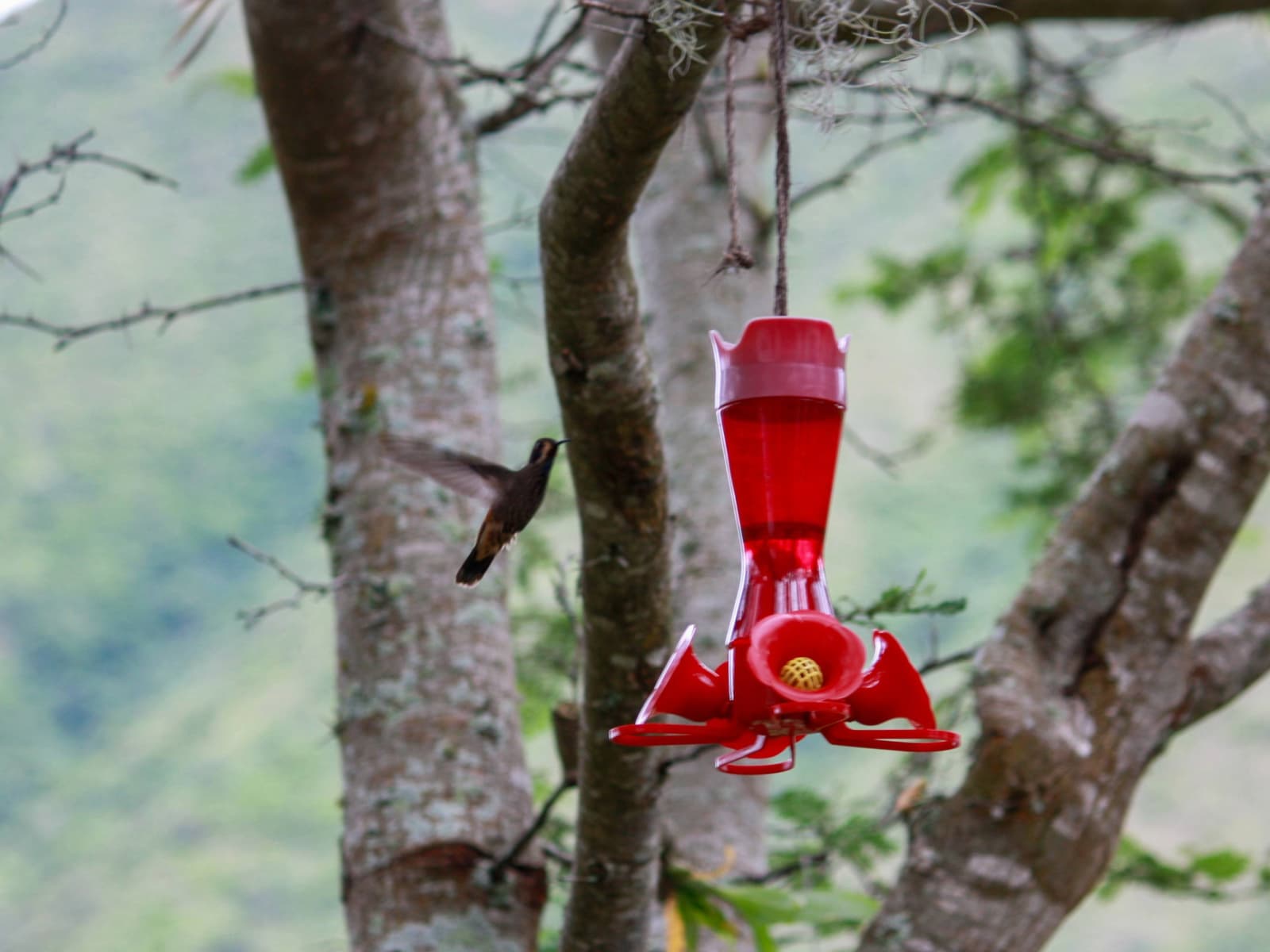
Watch approach routes first
Notice where birds enter, hover and leave before moving closer. Never block the path between cover and a feeding point.
Fast movement, patient observation
Hummingbirds may visit flowers, edges and managed feeding areas, but every encounter depends on habitat and current conditions. Stay still, keep routes open and let each bird choose the distance.
The forest offers possibilities, not a guaranteed species checklist.
Read the habitat
Watch patiently and let current forest conditions shape the experience.
Notice where birds enter, hover and leave before moving closer. Never block the path between cover and a feeding point.
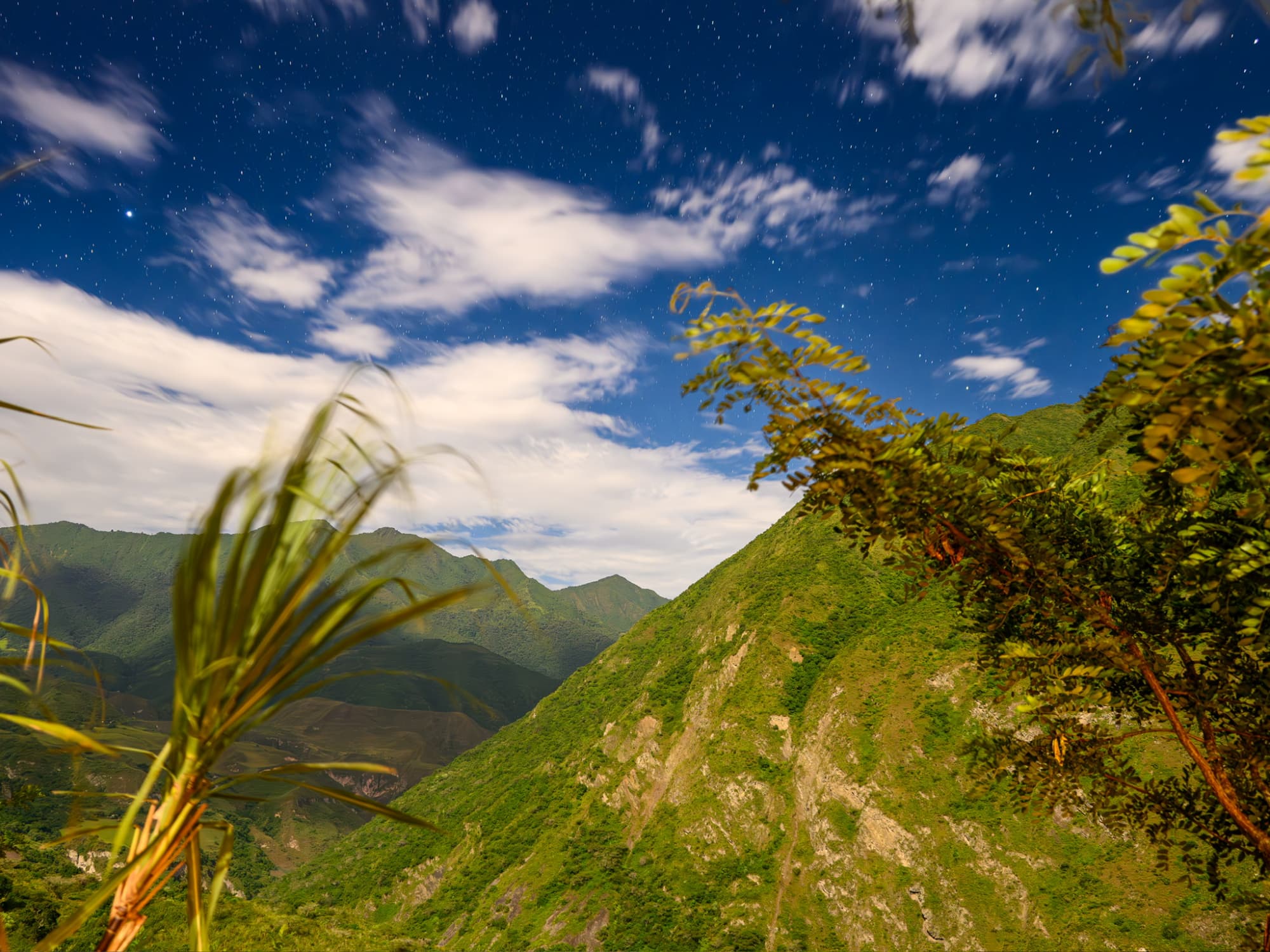
Fast flight and changing cloud make observation and photography demanding. Set equipment early and avoid sudden movement.

Flowering plants, forest cover, elevation and weather shape activity. A quiet habitat experience still matters when birds remain distant.
Plan before arrival
Room choice, transportation, possible guiding and equipment all belong in the plan.
Stand clear of flight paths and allow enough distance for normal feeding and retreat behavior.
Use binoculars, rain protection and a ready camera setting so equipment changes do not disrupt the moment.
Avoid flash when it disturbs wildlife, never chase a bird between perches and follow local guidance around feeders.
Build your field context
These guides help prepare expectations, ethics and priorities.
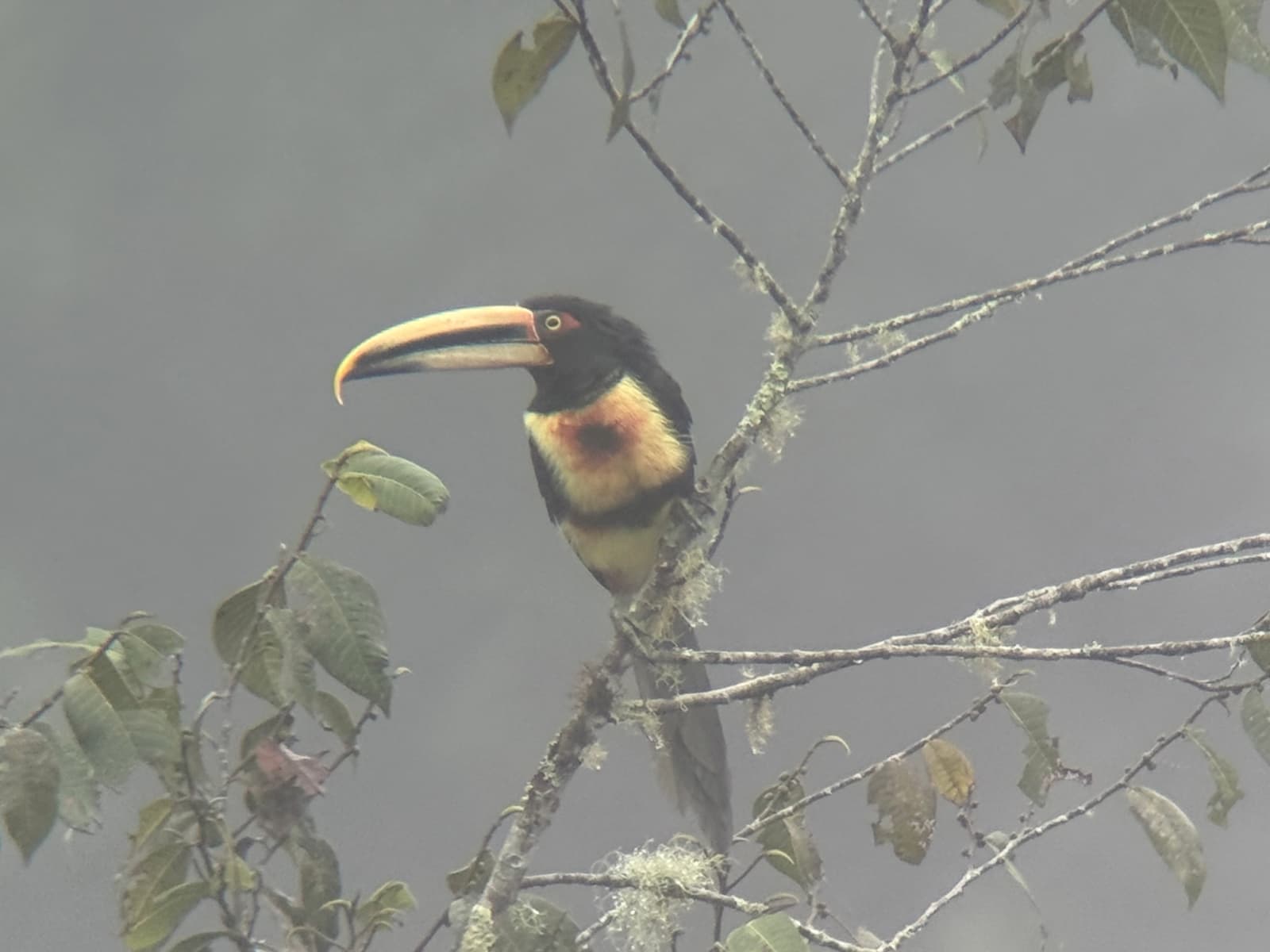
Understand how different habitat layers affect bird activity.
Explore →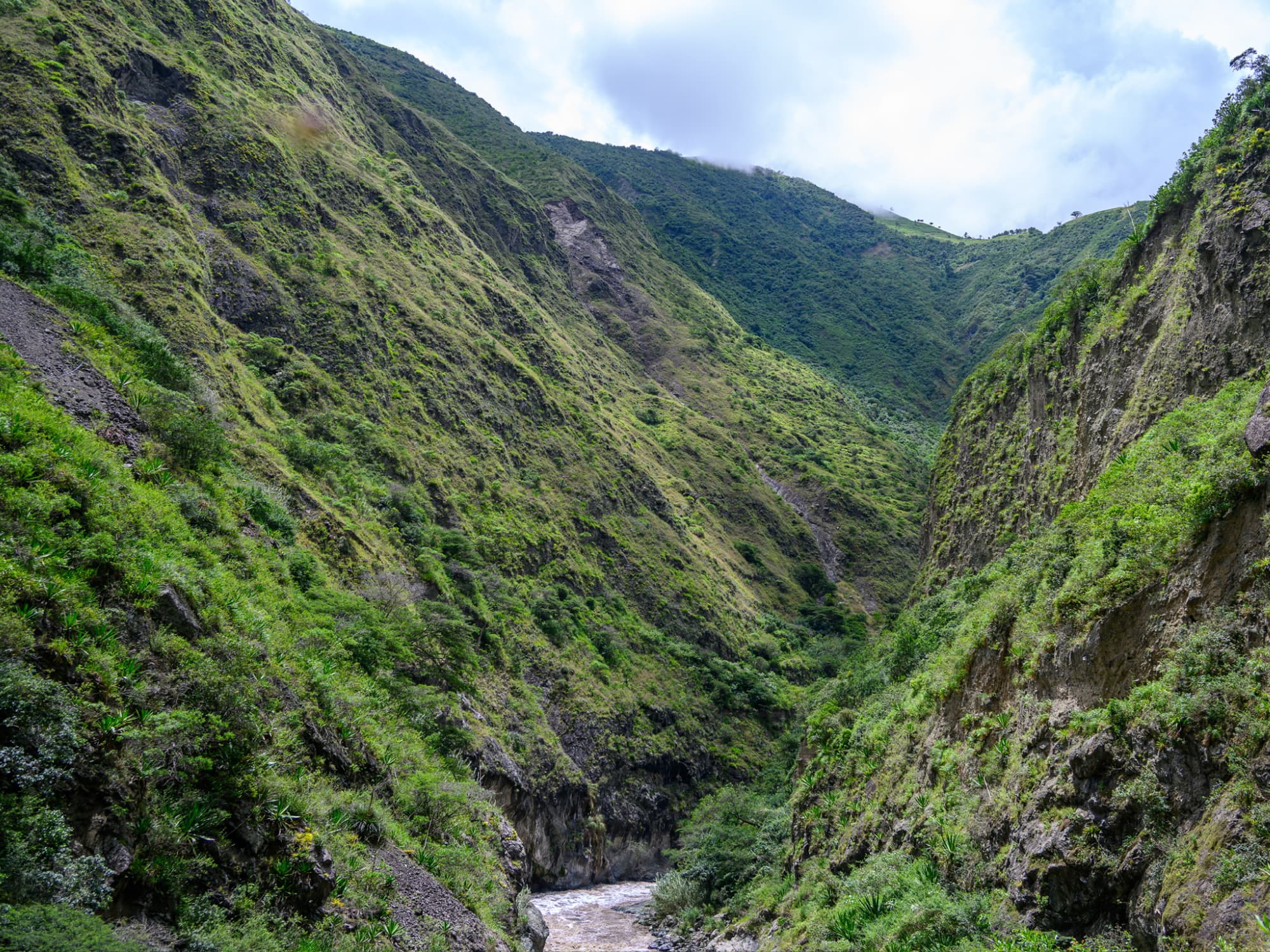
Build equipment, timing and logistics into a wider trip.
Explore →
Compare rooms and practical details for a birding-friendly stay.
Explore →Observe with care
Quiet behavior protects both the experience and the habitat.
Do not stand between cover, flowers or feeders.
Stay still and avoid following each short flight.
A photograph never justifies crowding or disturbance.
FAQ
Clear answers before booking a birding base.
Hummingbirds occur in suitable Andean and cloud forest habitats, but activity and particular species vary with place, elevation, plants, weather, time and chance.
No. Birds move freely, and no species, number or viewing distance can be guaranteed for a stay.
Photography may be possible, but keep approach routes clear, avoid crowding, limit disturbance and follow current property or guide instructions.
Binoculars, rain protection, layers and a camera configured before the encounter are useful. Protect electronics from moisture and avoid excessive equipment changes.